Social guide / NF 011
Sick in Japan?What to do before searching for a clinic
A cough, earache or swollen ankle can turn a good trip into a confusing search. Japan has official multilingual tools—but the useful moment to find them is before you need them.
Evidence label / Official visitor guidance • Medical institution directory • Current news lead
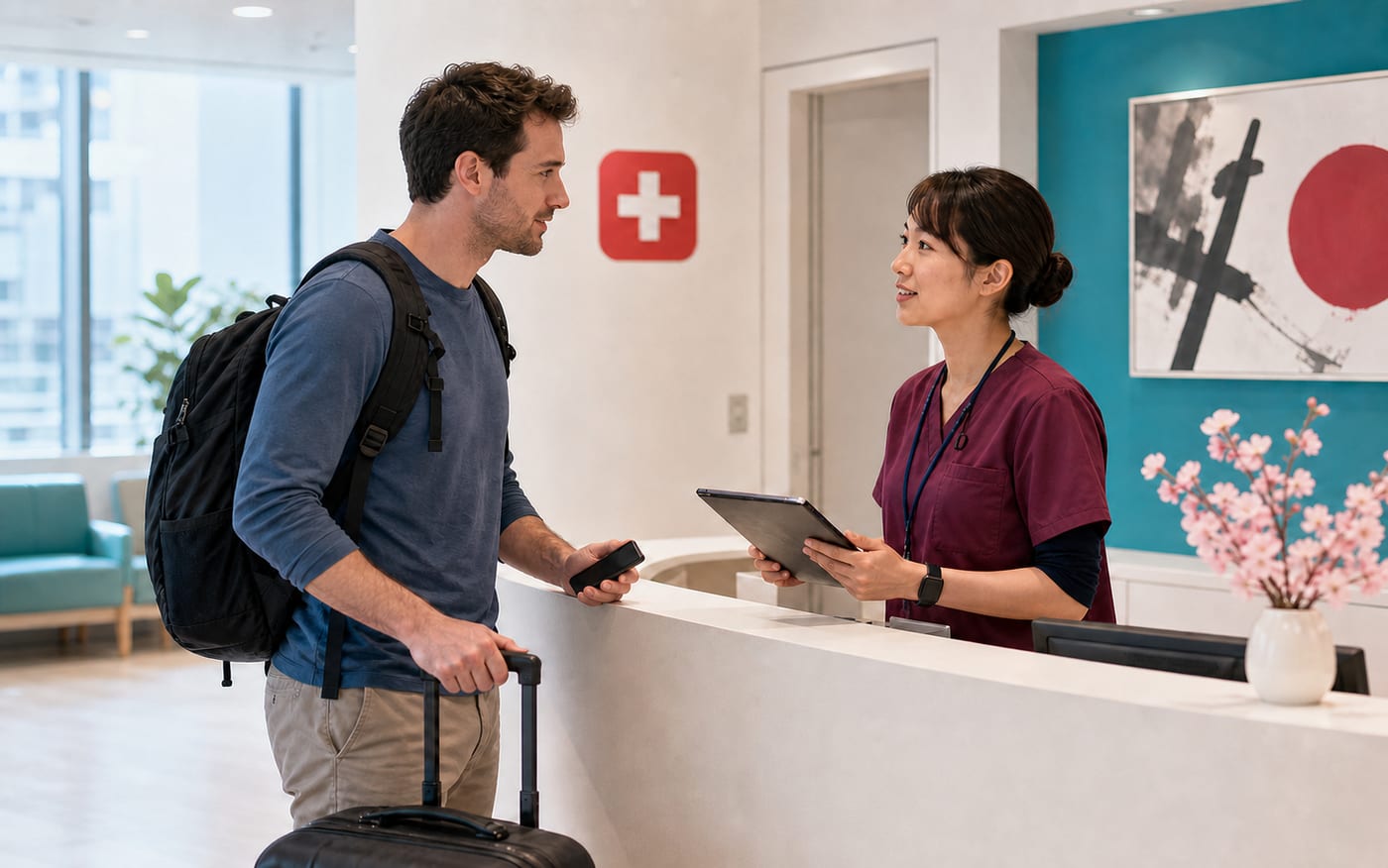
A recent Japanese television report followed overseas visitors seeking care for problems ranging from persistent coughing and ear pain to swelling and joint inflammation. The individual cases are not proof of a national trend. They are a useful reminder: illness abroad creates a navigation problem before it becomes a language problem.
Japan’s official visitor guidance provides a medical-institution search, a multilingual assistance line and downloadable communication sheets. Save those tools now. When you feel unwell, start with the seriousness of the symptoms—not the clinic with the best social-media reviews.
Emergency, doctor or pharmacy?
For a serious illness, major injury or other medical emergency, call 119 for an ambulance. JNTO’s guide notes that an ambulance takes the patient to an emergency hospital and that the patient cannot choose the destination. Police emergencies use 110; do not call that number simply because you need a doctor.
If you need a doctor but the situation is not an emergency, JNTO recommends a clinic or general hospital during regular hours, or an after-hours service where available. For a minor problem that does not require a doctor, a pharmacy or drugstore may be appropriate. Ask a pharmacist or registered seller rather than choosing unfamiliar medicine by package design alone.
Search by language and department
JNTO’s medical-institution search can filter by area, language, department, payment card and emergency availability. The underlying government list was updated in March 2026 through cooperation between the Japan Tourism Agency and the Ministry of Health, Labour and Welfare.
A search result is a starting point, not a guaranteed appointment. JNTO advises contacting the institution before visiting because hours, language coverage and the ability to accept a particular case can change. If you do not know the department, the official symptom guide points uncertain patients toward general diagnosis and treatment.
Use the visitor hotline for navigation
The Japan Visitor Hotline provides help in English, Chinese and Korean, 24 hours a day, 365 days a year. Its number is 050-3816-2787. JNTO says it can assist with illness, disasters, tourism information and introductions to institutions offering foreign-language consultations.
The hotline is not a substitute for an ambulance, and as a general rule it does not provide three-way medical interpretation or make reservations. Use it to find the right door; use medical staff for diagnosis and treatment.
Save the official search and hotline before your body makes the decision urgent.
Prepare to explain the basics
Write down when the symptom started, where it hurts, relevant allergies, current medicines and existing conditions. Carry the generic names of prescriptions, not only a photo of branded packaging. JNTO offers a medical-information sheet and a point-to-symptoms sheet that can reduce avoidable confusion at reception.
Bring your passport, insurance information, a payment method and the address of your accommodation. If the condition worsens while you are waiting or traveling, reassess whether it has become an emergency.
Do not assume the payment method
JNTO recommends asking reception for a general cost estimate. Its guide warns that credit-card acceptance is more common at major hospitals while clinics may require cash. Prescription medicine may be paid for separately at a pharmacy.
Travel-insurance conditions differ. Some policies arrange cashless treatment, referrals or interpretation; others require the traveler to pay first and claim later. Confirm the procedure with the insurer before treatment when the situation allows, but never delay emergency care to negotiate paperwork.
A two-minute preparation checklist
Bookmark the official medical search. Save 119 and the Japan Visitor Hotline. Photograph your insurance details and prescriptions without exposing them publicly. Pack enough routine medicine for the trip, subject to Japan’s import rules. Then tell a travel companion or accommodation staff member where you are going if you seek care alone.
The goal is not to diagnose yourself. It is to reach appropriate care with fewer wrong turns, clearer information and a realistic plan for payment.
This is general travel information, not medical advice. Symptoms, urgency, available languages, opening hours, fees and insurance coverage vary. Contact a medical professional or emergency service for advice about an individual situation.
Continue by topic
More Japan etiquette guides