Social guide / NF 009
What omakase is nottrust, price and when to speak up
Leaving the menu to the chef is not permission to hide the bill, ignore an allergy or silence the diner. Good preparation protects both sides of the counter.
Evidence label / Official visitor guidance • Practical risk boundaries
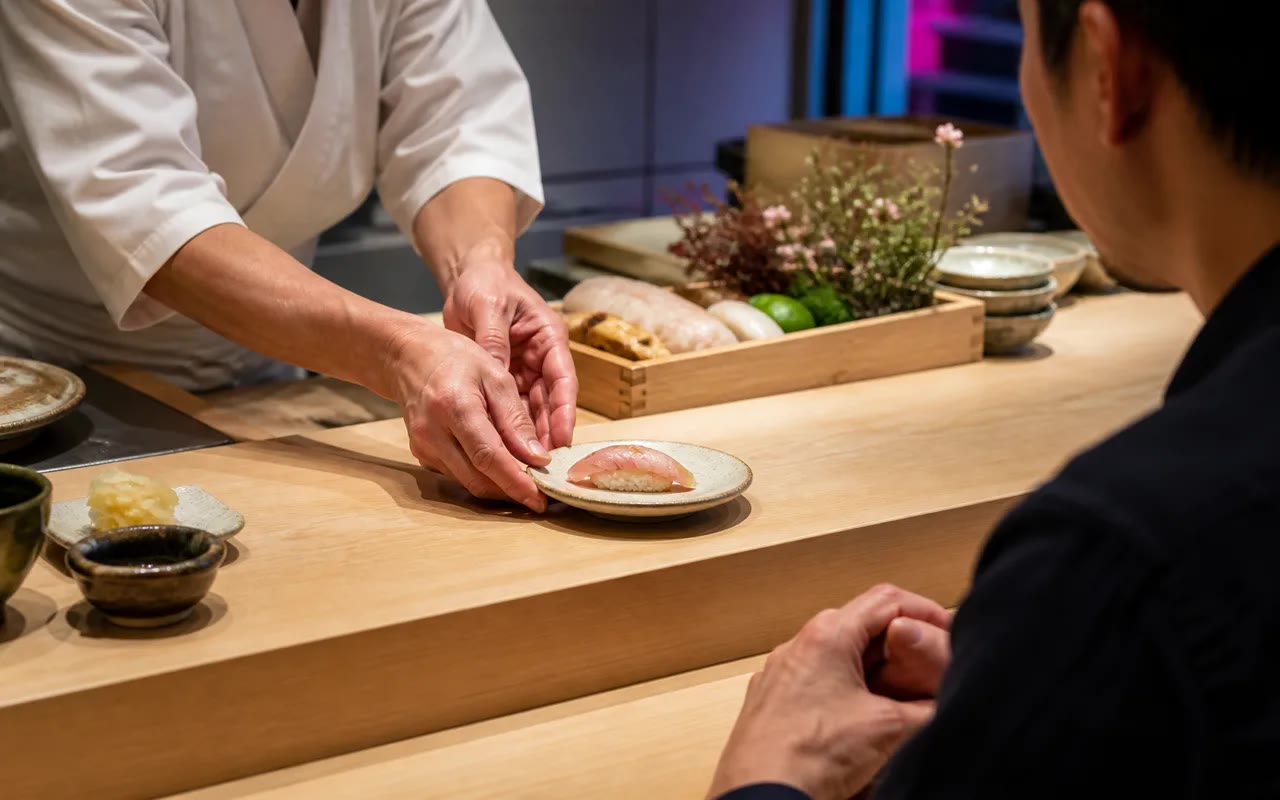
Omakase means entrusting selection to the chef. It does not mean surrendering your health, budget or ability to ask a clear question.
The experience works best when two kinds of trust meet: the diner accepts the chef’s sequence, and the restaurant gives the diner enough information to consent to the meal.
Not a blank check
Before you reserve, confirm the course price, tax, any service or seating charge, the likely drink cost and the cancellation policy. If a menu says market price or lists supplements, ask how those affect the likely total. A polite question about cost is not an insult.
At the counter, an offered extra piece, premium ingredient or pairing may add to the bill. Ask Is this included in the course? if it is not clear. Do not assume that a friendly recommendation is free—and do not assume every recommendation is a trap.
Not a test of obedience
Allergies and dietary restrictions belong in the reservation, not as a surprise after ingredients have been prepared. JNTO advises contacting restaurants in advance, especially for set menus, and being specific about ingredients you cannot eat. Terms such as vegetarian may be interpreted differently; stocks and sauces can contain fish or meat.
A restaurant may be able to adapt the course, offer an alternative or tell you that it cannot safely accommodate the request. That last answer can be disappointing, but it is better than an improvised promise. If cross-contact could cause a serious reaction, say so explicitly and do not book unless the restaurant confirms it can meet your needs.
A preference is different from an allergy, but it is still better communicated before booking. A heavily restricted request can change the premise of a chef-selected course; some restaurants will reasonably decline.
Not compulsory silence
You can ask what a fish is, where an ingredient came from or whether to use your hand or chopsticks. Keep the question concise when the chef is serving several guests. If language is a barrier, prepare a translated dietary card before you arrive.
Photography rules vary. Ask once before filming the chef or other diners. Turn off flash and sound, and eat time-sensitive food when it is served. JNTO also advises avoiding strong fragrances in settings such as sushi restaurants, where delicate aromas matter.
Trust the sequence. Verify the conditions.
Tipping is not the thank-you
JNTO says tipping is not common in Japanese bars, cafes, restaurants, taxis or hotels. Pay the stated bill. A service charge may still appear if that is part of the restaurant’s pricing; it is not the same as an optional tip.
Appreciation can be simple: Gochisosama deshita—thank you for the meal—and punctual, considerate conduct. If you enjoyed the experience, an accurate review is more useful than leaving unexplained cash on the counter.
The pre-booking checklist
Know the price and cancellation terms. Disclose allergies and restrictions. Confirm whether the restaurant can accommodate them. Arrive on time. Ask before photographing people. Then let the chef do the part you actually chose omakase for: deciding what to serve and in what order.
Omakase formats, cancellation rules and accommodation policies differ by restaurant. Confirm the exact course, total charges and dietary requirements with the establishment before booking.
Continue by topic
More Japan etiquette guides