Women & culture / NF 002
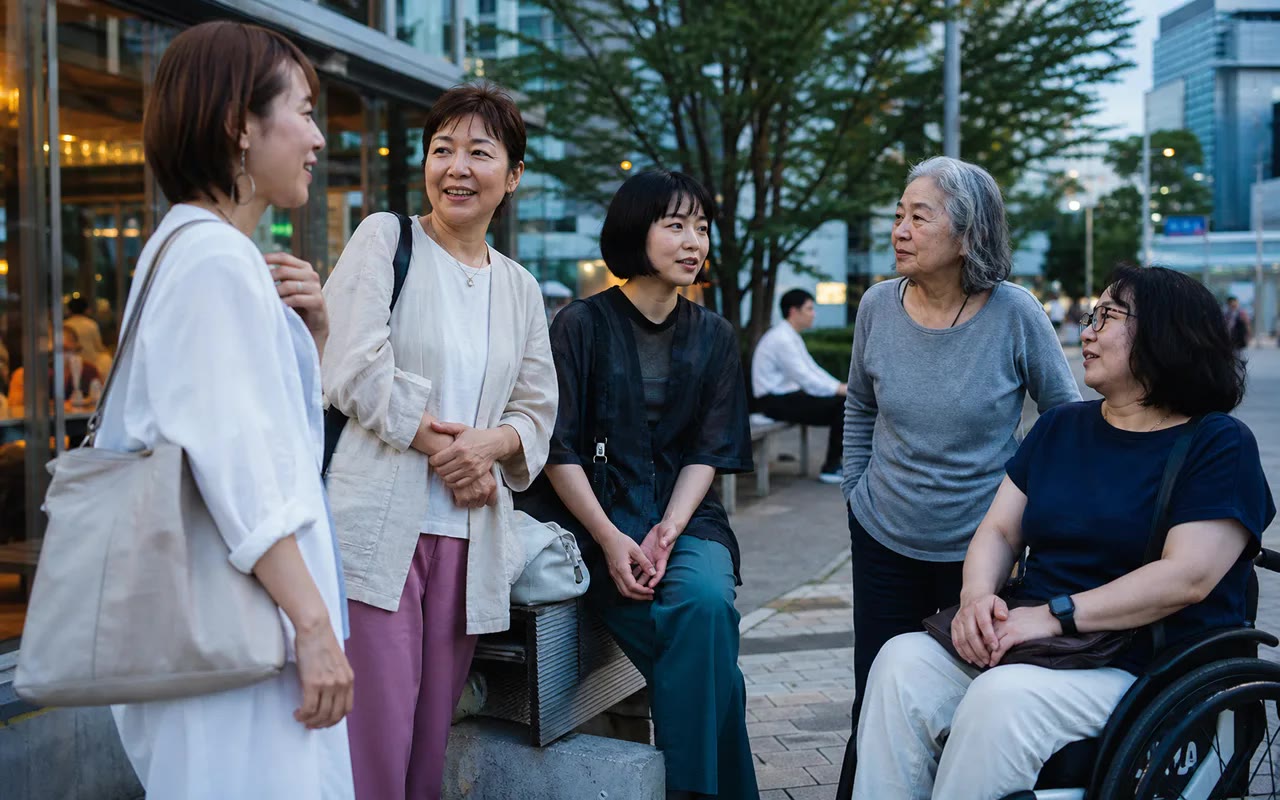
“What do Japanese women think?”Start by asking: which women?
A national survey can reveal patterns. It cannot turn millions of people into one personality—or answer whether Japanese women “prefer foreign men.”
Evidence label / National survey • Fielded June 2021 • Not a survey of attraction to foreigners
Search in English for what Japanese women want, and the answers often arrive with suspicious confidence: they are shy, traditional, career-minded, marriage-minded, fascinated by foreigners—or tired of them. These claims cannot all describe the same person. They do not even describe the same group.
The strongest numbers still need a label
Japan’s National Institute of Population and Social Security Research conducted its 16th Japanese National Fertility Survey in June 2021. It is a serious national study used to understand marriage and childbearing trends. For unmarried respondents, the survey covered men and women aged 18 to 54; many headline results focus on never-married people aged 18 to 34.
Among never-married women aged 18 to 34, 84.3% said they intended to marry someday. That was down from 89.3% in the previous 2015 survey. In the same 2021 results, 27.8% were dating, while 64.8% reported having been in a romantic relationship at some point.
Those three facts are compatible. Wanting marriage eventually is not the same as wanting a partner today. Having dated before is not the same as currently dating. A survey result becomes misleading when those different questions are blended into a single story about “losing interest in romance.”
The denominator changes the headline
The detailed Japanese tables give a useful example. Among female respondents in the simple tabulation who said they had no opposite-sex partner, 38.3% said they wanted one, 53.2% said they did not particularly want one, and 8.5% were unclassified. That does not mean 53.2% of all Japanese women reject dating. It describes a subset of unmarried survey respondents who first reported having no opposite-sex partner.
“A number without its denominator is a stereotype waiting to happen.”
What the survey cannot tell a foreign visitor
The questionnaire is framed around opposite-sex relationships, marriage and fertility. It is not a study of all sexual orientations or every kind of partnership. It also does not ask whether women prefer Japanese or foreign partners. The data therefore cannot support the familiar claim that “Japanese women prefer foreign men”—or its opposite.
Nationality is only one detail in an actual encounter. Age, city, language, work, previous travel, safety, personality and the setting all matter. A person enjoying a conversation in a bar is not evidence of a national preference, and friendliness is not automatic romantic or sexual consent.
A better way to read “women’s voices”
Start with the evidence type. A national survey can estimate broad patterns. An interview can explain one person’s reasoning. A social-media thread can reveal a conversation happening in one corner of the internet. None can substitute for the others.
Then ask who is missing: married women, older women, rural residents, queer women, people who avoid social media, or those who do not answer surveys. Finally, separate observation from advice. The most reliable advice for a visitor is modest: treat the person in front of you as an individual, notice whether interest is reciprocal, and make it easy for either person to say no.
This article summarizes published government research; it does not claim to speak for individual Japanese women. Percentages are preserved with their populations and question context.