After hours / NF 027
Do you have to drink at a Japanese nomikai?How to join without pressure
A nomikai is a social gathering, not a contract to consume alcohol. Join the toast, choose your own drink and keep your exit easy.
Evidence label / Official drinking guidance • JNTO dining etiquette • Practical Japanese phrases
A Japanese nomikai can be a work gathering, a reunion, a club event or simply dinner that happens to include drinks. The word tells you the format. It does not tell you what must be in your glass.
The most useful etiquette is smaller than the mythology: join the shared moment, order honestly, do not pressure anyone else and leave while you can still make good decisions.
A nomikai is an invitation to the table—not an alcohol contract
Nomikai literally combines nomi, drinking, with kai, gathering. Alcohol is common, but the social purpose may be conversation, food, team bonding or marking an occasion. Japan’s official tourism guidance describes drinking parties and izakaya as food-centered social settings, and modern menus commonly include tea, soda and alcohol-free beer-style drinks.
Accepting the invitation does not create an obligation to drink, finish a glass or match another person’s pace. Japan’s Ministry of Health explicitly lists forcing another person to drink among the behaviors to avoid. That is a health boundary, not a failure to understand Japanese culture.
Join the kanpai with whatever you actually want
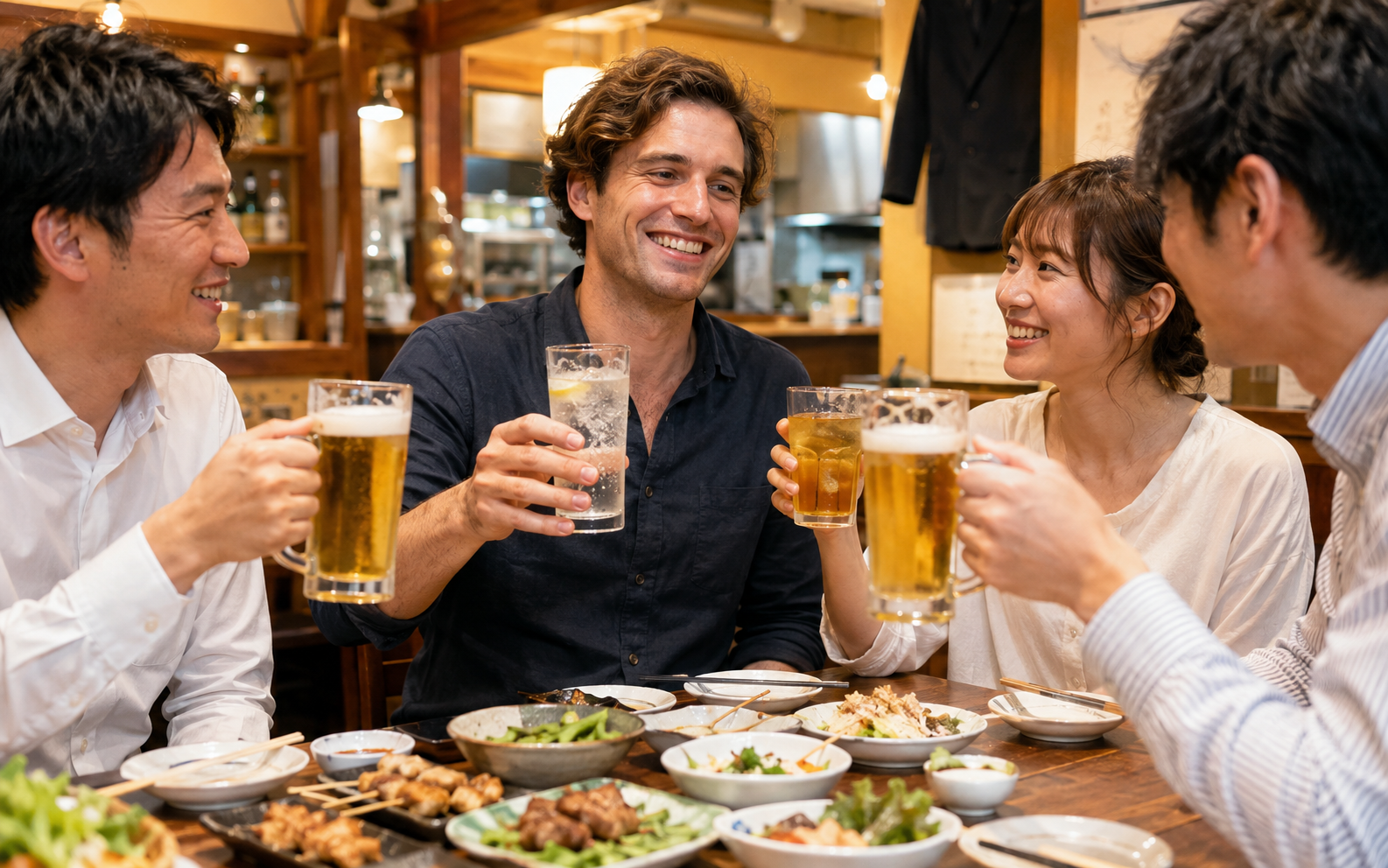
The opening toast is the easiest moment to participate. Order your preferred drink before it begins, raise the glass when everyone says kanpai and take the sip you choose. Water, tea, juice and a non-alcoholic option can carry the same social gesture.
If somebody reaches to refill an alcoholic drink you do not want, keep the glass partly full or place a hand lightly near it and say, “Osake wa nomimasen” (I do not drink alcohol) or “Kore de daijōbu desu” (This is fine for me). You do not need a medical story or apology. A calm statement is easier for the group to follow than a long negotiation.
Kanpai is the shared moment. What is in your glass is your decision.
A five-step plan for a low-pressure night
First, check whether the booking is a fixed course or nomihōdai all-you-can-drink plan; a non-drinker may still be charged the group price. Second, order food early. Third, alternate alcohol with water if you choose to drink. Fourth, decide your last train before the second round. Fifth, tell one person when you are leaving instead of disappearing from a crowded venue.
The Ministry of Health recommends deciding an amount in advance, eating before or during drinking, drinking water between alcoholic drinks and avoiding rapid, heavy consumption. These are general risk-reduction steps, not a promise that a particular amount is safe for every body. Medication, health, sleep, pregnancy and individual alcohol metabolism can change the risk.
Common misconceptions that create unnecessary pressure
“Refusing the first beer is rude” confuses a shared toast with a shared ingredient. “An empty glass is polite” can invite an automatic refill; JNTO’s etiquette guide notes that it is acceptable not to finish a drink. “Nomihōdai means you should get your money’s worth” mistakes a pricing system for a challenge. Paying a fixed price does not make faster drinking rational.
“Everyone becomes more honest after drinking” is another unreliable shortcut. Alcohol can lower inhibition, but it can also reduce judgment and blur memory. Treat affectionate words, business promises and invitations made late in the night as things to confirm clearly when everyone is sober.
The best cultural move is to protect everyone’s choice
If you are hosting, ask what people want instead of filling every glass automatically. Include alcohol-free choices in the first order, keep water on the table and make leaving for the last train socially easy. A good nomikai lets the quiet guest, the enthusiastic drinker and the non-drinker share the evening without being turned into a debate.
The evidence here describes official health advice and broad visitor etiquette, not every workplace or friend group in Japan. Some gatherings are relaxed; some still carry old pressure. The practical test is not whether you performed a stereotype correctly. It is whether each adult could choose, communicate and leave without punishment.
Keep reading
Official guidance explains health risks and visitor etiquette; it does not establish how every Japanese employer, friend group or venue behaves. The suggested phrases are plain-language tools, not legal or medical advice.
Continue by topic
More Tokyo nightlife guides