Women & culture / NF 018
Japanese women’s fashion in 2026:what “cute” looks like now
Shōjo-manga romance, Heisei nostalgia, charms and jelly textures are visible signals—not a uniform for all Japanese women.
Evidence label / Youth trend sample • Retail observation • Scope clearly labeled
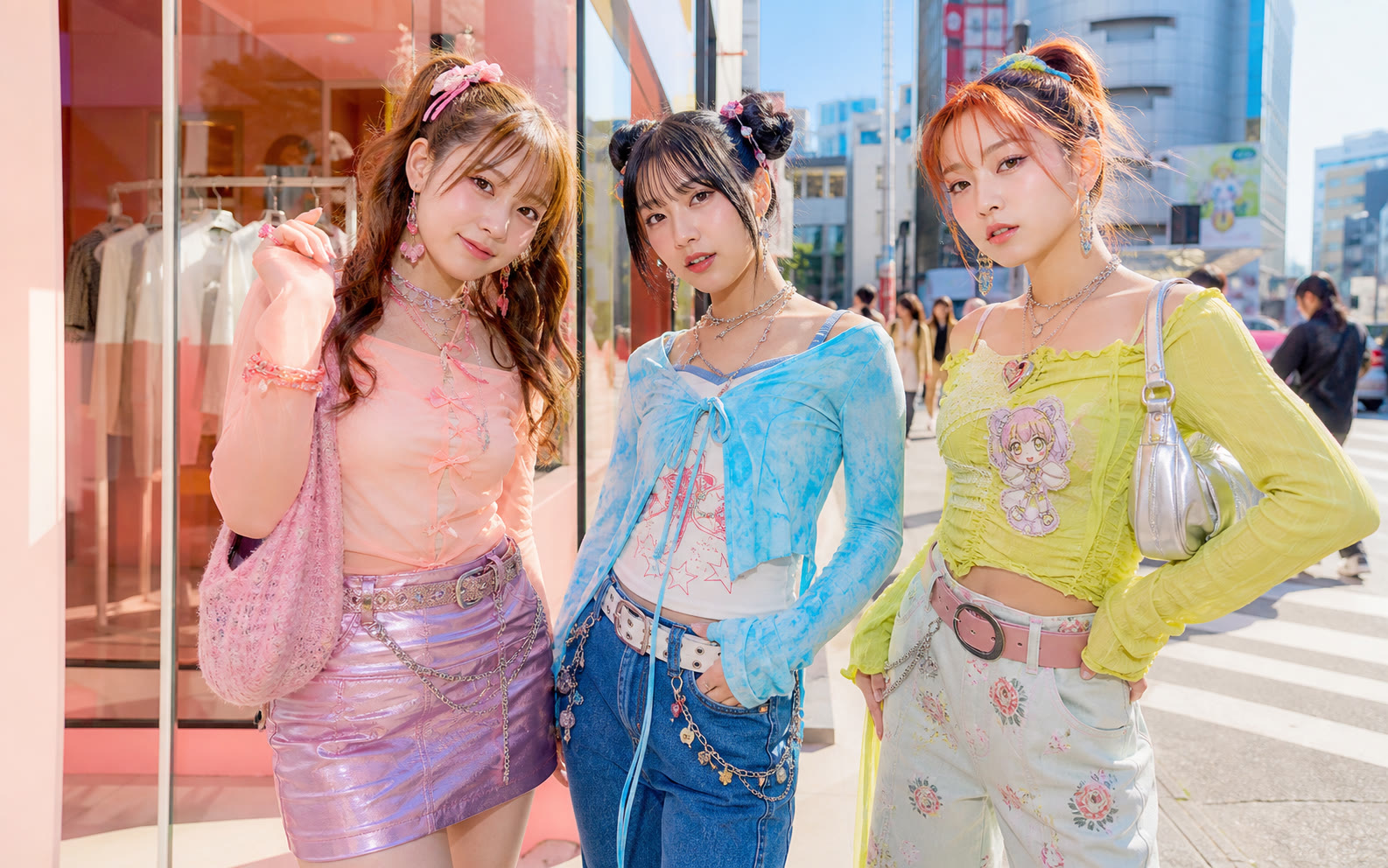
Tokyo fashion in 2026 is less one silhouette than a toolkit: romantic manga references, Heisei-era nostalgia, tiny charms, translucent color and deliberate offline calm.
The strongest source here is SHIBUYA109 Lab’s trend forecast based on a survey of 401 women aged 15–24. That is valuable youth-culture evidence. It is not a survey of all Japanese women, and the styling advice below is for adults.
Shōjo-manga core makes emotion visible
Ribbons, soft layers, school-story references and romantic illustration aesthetics turn an imagined emotional world into clothes and accessories. The appeal is not simple childishness; it is a knowingly constructed mood shared through recognizable details.
Adults can borrow the language without dressing as a character: one ribbon, a nostalgic print or a delicate bag can carry the reference.
Heisei-girl nostalgia remixes the recent past
The Heisei era ended in 2019, yet its pop styling, gadgets, glossy makeup and magazine energy now function as nostalgia. Younger wearers often encounter that past through archives and social feeds rather than firsthand memory.
This is a remix, not a museum reconstruction. A vintage-looking charm can sit beside a current phone, and a retro silhouette can use contemporary materials.
A trend report is a map of signals, not a dress code for a nation.
Customization makes mass products personal
Bag charms, badges and small collectible objects allow visible authorship without replacing an entire wardrobe. The same base item becomes a display of music taste, characters, color and friendships.
For visitors, this is an accessible shopping route: choose one local object with a story rather than buying a costume labeled “Japanese style.” Never photograph someone’s bag or outfit at close range without asking.
Jelly color adds shine without heavy formality
Translucent tints, glossy finishes and clear or gel-like accessories make color look light and tactile. The effect can appear in lips, shoes, nails, bags or jewelry rather than one head-to-toe trend.
Retail trend names move faster than everyday wardrobes. Treat them as search terms for exploring stores, not requirements for looking current.
Attention detox is part of the aesthetic
SHIBUYA109 Lab has also tracked interest in stepping away from constant feeds. Paper planners, analog hobbies, quiet cafes and device-light gatherings can become lifestyle signals alongside fashion.
The apparent contradiction is the point: highly shareable objects can support less screen-centered time. “Cute” now can mean a social object, a private ritual or a humorous reference—not one fixed feminine ideal.
Keep reading
This article distinguishes verified facts from interpretation and practical advice. It does not claim to represent every person in Japan.
Continue by topic
More Japanese women & culture guides