Social guide / NF 030
Left a bag on a JR East train?What to tell staff—and what to check before collection
Start with the operator, describe the journey and the bag, and confirm the collection arrangements. A useful report beats a rushed trip to the wrong counter.
Evidence label / JR East official guidance • Visitor checklist • No recovery guarantee
You step off the train and realize the overhead rack still has your bag. Before chasing the next departure, pause somewhere clear of the passenger flow and work out which train you were on. The goal is to give the right operator a report it can use.
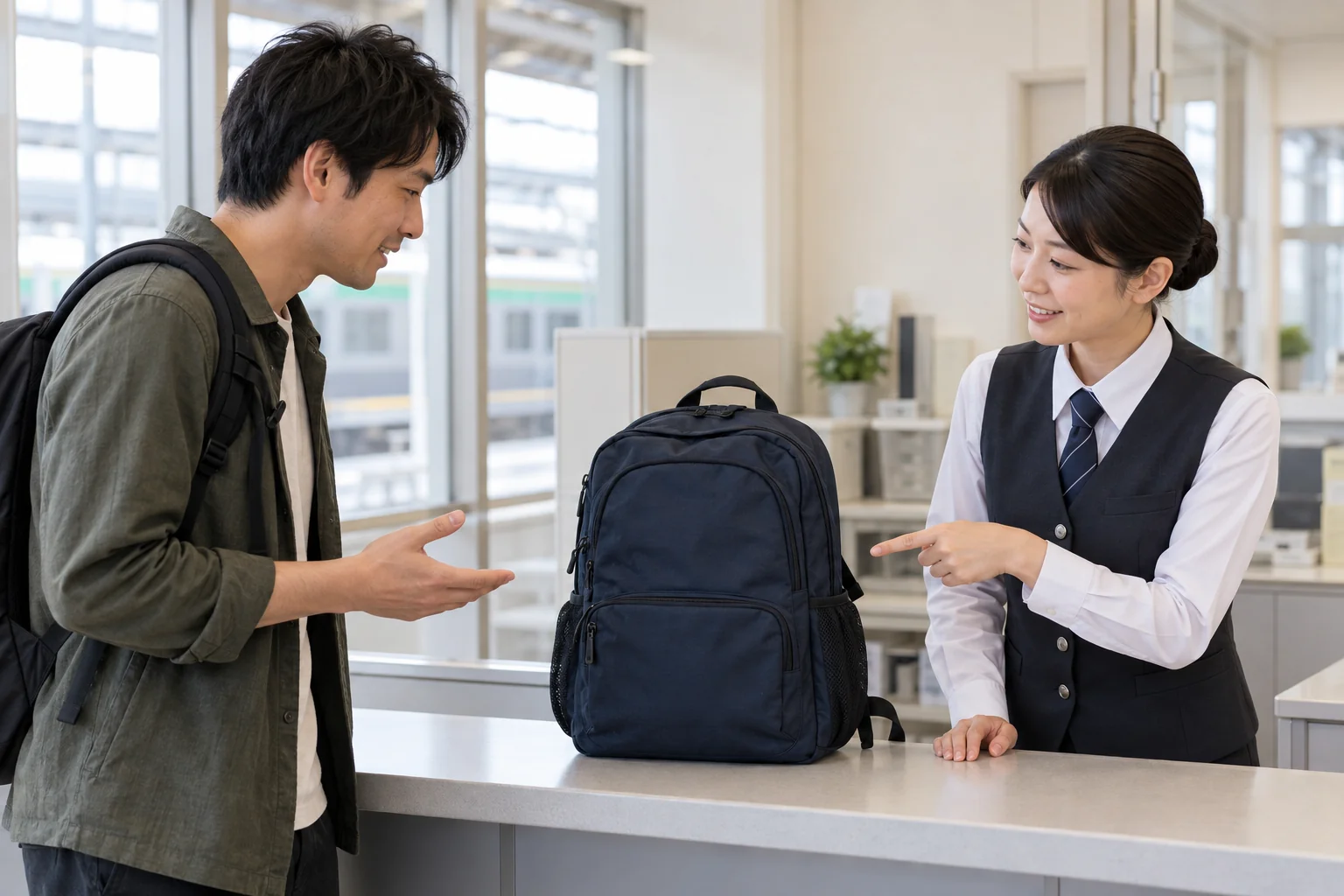
This guide covers JR East, not every railway in Japan. It combines the operator’s lost-property information with our practical planning suggestions. The illustration shows a fictional counter conversation; it does not imply that a reported bag has been found or will be returned.
1. Start with the operator you actually used
JR East’s lost-property page directs passengers to station staff, its inquiry chat or telephone support. For help in English, Chinese or Korean, the JR East Infoline lists lost-and-found assistance at +81 50 2016 1603. Its published hours are 10:00–18:00, excluding the year-end/New Year holidays; check the linked page for current availability.
Our first suggestion is to look at your ticket or journey record and identify the company operating the train. A familiar station name alone may not settle that question. If you are unsure, tell staff where you boarded, where you got off and which service you think you used. State uncertainty rather than guessing a train number.
2. Prepare a description that distinguishes your bag
JR East asks for the date and time, station or line, likely location of the loss and the item’s identifying features. Color, shape, material, maker and contents help; a photograph of the same item can also assist the search.
Our suggested note has two parts: the journey and the object. For the journey, add a car or seat number if you know it. For the object, describe a distinctive strap, repair, pocket or attachment. “A blue bag” is a starting point; a detail you can explain consistently is more useful. Keep this note for follow-up so your account does not change each time.
Describe the journey, distinguish the bag, then confirm the next step.
3. Allow for the gap between finding and registration
The operator warns that found items may take time to appear in its system. It also says it cannot individually search a train while it is in passenger service, even when GPS shows an item’s location. Chat intake is available around the clock, but responses may arrive the next day or later.
Our advice is to keep any reference or reply and follow the instructions you receive. If nothing is registered yet, ask when and how to check again. A first unsuccessful inquiry does not establish that the bag is gone, while a location signal does not establish that someone has identified it and arranged collection.
4. Confirm collection before making another trip
JR East says storage periods differ by station and items can later move to a designated police station. Collection travel costs are the customer’s responsibility, and staff may ask for details or checks to establish the item belongs to you.
Our collection checklist is to confirm the exact counter, opening time, reference number and what you should bring. If you cannot attend personally, ask the operator which alternatives are available before arranging anything. Do not assume the item will be waiting at the station where you first reported it, or that a hotel can collect or receive it for you.
Avoid turning a report into a promise
A helpful staff member, a submitted form or a matching description is not a guaranteed recovery. Keep any onward plans flexible until you have a clear answer about the item and its location. If you need help with Japanese, our linked guide to asking for repetition can make the conversation easier.
The sources below describe a process, not a recovery-rate study. They do not establish how quickly your bag will be located, whether delivery will be possible or how another railway handles lost property. Use the official contact route for your particular case and share identifying details there, rather than publishing bag contents or personal documents on social media.
Keep reading
Operator procedures were checked on September 15, 2026. Planning checklists are editorial suggestions, not promises of recovery or universal railway rules. AI-generated image of fictional adults and a generic station.
Continue by topic
More Japan etiquette guides