After hours / NF 016
Love hotels in Japan:what visitors should know first
A practical, non-explicit guide to pricing, check-in, privacy, consent and the questions worth asking before you enter.
Evidence label / Official visitor guidance • Local law • Adult safety checklist
Love hotels are commercial accommodation, not a secret code and not automatic permission for anything that happens inside.
For adult visitors, the useful questions are ordinary ones: What is the total price? How long is the room available? What identification and payment methods are accepted? Can either person leave easily?
Rest, stay and extensions
Many properties distinguish a short “rest” from an overnight “stay.” Prices may vary by day, time, room grade and demand. An extension can be charged automatically once the booked period ends, so photograph or note the displayed terms before selecting a room.
Do not assume a bright price on a sign is the final total. Look for tax, weekend, late-night, membership or special-room conditions. If the explanation is unclear, leave before checking in rather than negotiating after the door closes.
Check-in is less standardized than a chain hotel
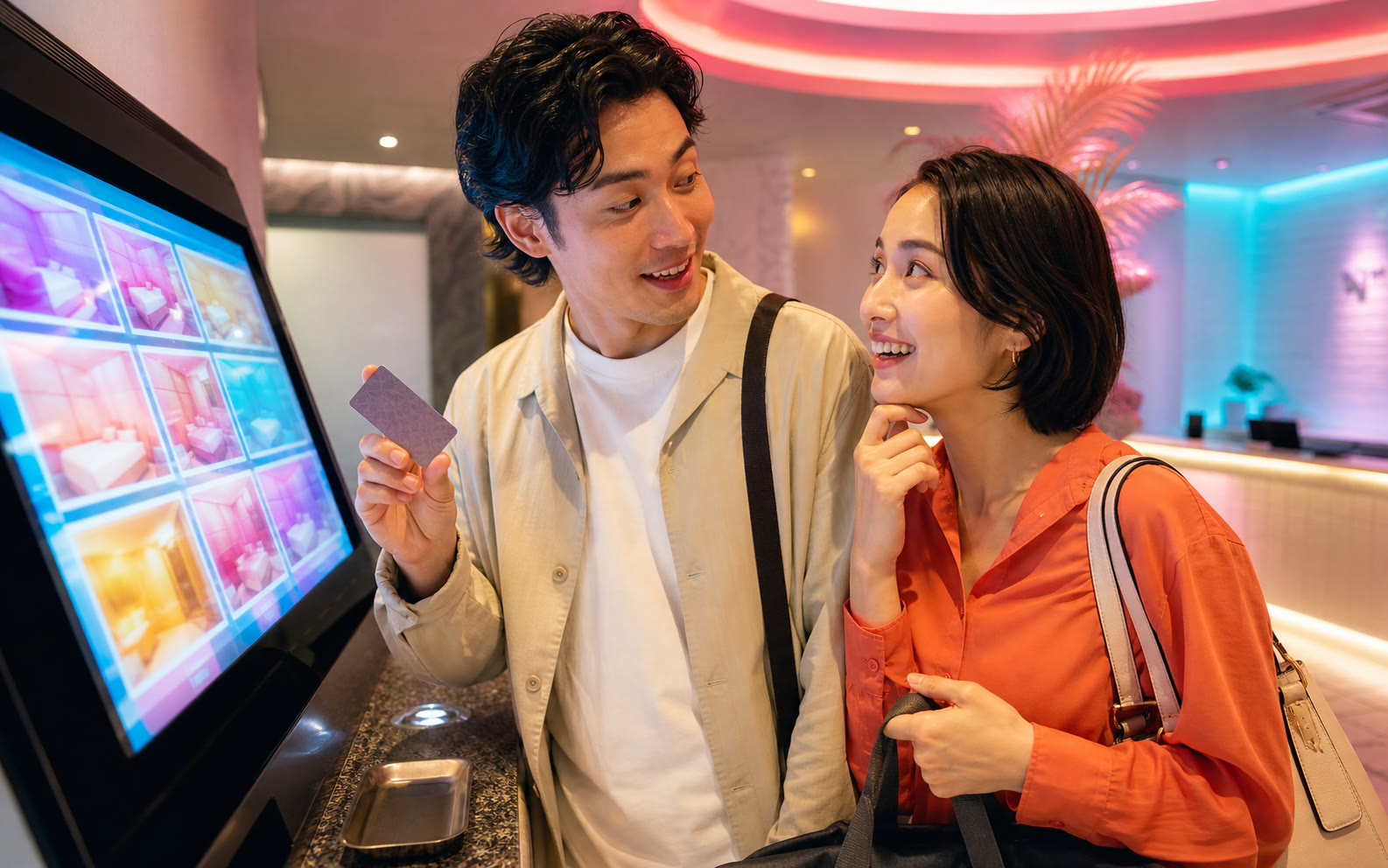
Some properties use a front desk, others a room-selection panel or limited-contact window. Card acceptance, foreign-ID procedures, luggage storage, re-entry and same-sex couple policies can vary. A travel booking platform does not guarantee every on-site detail.
Choose a property with recent, credible information and a visible contact route. If accessibility, medication refrigeration or a specific check-out time matters, confirm it directly.
A hotel room provides privacy. It does not provide consent.
Consent is a separate decision
Entering a hotel does not settle what either adult wants next. Ask clearly, accept a change of mind and never use money, alcohol, the last train or embarrassment as leverage.
Keep your own phone, identification and transport option. If either person is too intoxicated to make decisions, the correct plan is safety and rest—not escalation.
Privacy does not mean no rules
Japanese local laws still apply. Do not photograph or record a partner without explicit agreement, damage property, bring prohibited items or assume staff will ignore extra guests. Privacy is a service feature, not immunity.
Tokyo police advise nightlife visitors to avoid street touts and venues with unclear charges. That warning matters before accommodation too: use the listed entrance and price system, not a stranger’s “special deal.”
A five-question door check
Before entering, both adults should know: the price and end time; how each person will get home; whether both actively want to go in; whether alcohol is impairing either person; and whether the room’s rules are understood.
If any answer is foggy, pause. A clear decision is not less spontaneous—it is what keeps a private night private, adult and mutual.
Keep reading
This article distinguishes verified facts from interpretation and practical advice. It does not claim to represent every person in Japan.
Continue by topic
More Tokyo nightlife guides