After hours / NF 033
Sex etiquette in Japan: what should you discuss first?Consent, condoms and privacy before intimacy
A practical, non-graphic checklist for adults: ask what each person wants, discuss protection, and keep private moments private.
Evidence label / Japan Cabinet Office consent guidance • WHO condom guidance • Editorial privacy advice
An evening in Japan can move from a good date to a private conversation quickly. The useful question is not whether there is a secret Japanese rule for sex. It is whether both adults can say what they want, what they do not want, and how they will protect each other without pressure.
This is an adult checklist, not a claim about what Japanese partners prefer. The Japan Cabinet Office says each person decides when, where, with whom and what kind of sexual relationship they want. Its guidance also says that agreeing to one act does not mean agreeing to another.
1. Ask, and make “no” easy to say
Before intimacy, try a plain question: “Do you want to keep going?” Leave space for a real answer. A date, a kiss, a paid room or a previous encounter cannot answer it for someone today. If the answer is hesitant, unclear or changes, pause. A good night can end without sex.
The Cabinet Office warns that a situation in which someone cannot refuse freely is not genuine consent. That principle applies regardless of nationality, gender or relationship status. Do not treat silence or politeness as a yes, and do not turn uncertainty into a test of someone’s attraction.
2. Discuss condoms and sexual health before the moment
Ask what protection each person expects and whether either person wants to talk about STI testing, pregnancy risk or another concern. “I would like us to use condoms; are you comfortable with that?” is clearer than leaving the topic to guesswork. If you cannot agree on protection, stop and talk later.
The World Health Organization says condoms, used correctly and consistently, are highly effective at reducing the risk of sexually transmitted infections, including HIV, and unintended pregnancy. They do not remove every risk. This article cannot assess an individual health situation; a qualified clinician or local health service can help with specific questions.
A private setting is a place to talk, not a substitute for consent.
3. Agree on privacy, not just the place
A private room does not grant permission to photograph, record or tell friends intimate details. Ask before any image or recording, and accept “no” without bargaining. Our practical rule is simple: keep phones away unless both adults have clearly agreed on a specific use.
If you are planning a late night, settle the ordinary logistics too: how each person will get home, who pays for a room if one is used, and whether either person would rather leave. Those conversations can reduce pressure. For venue basics, see our separate love-hotel guide; for getting home, see the last-train guide below.
Common mistake: reading the setting as consent
“We came here together, so I assumed” is a poor substitute for asking. The official Japanese consent guidance concerns personal autonomy, not a dating script. The WHO source addresses health risk, not what a particular partner wants. Neither source establishes a national pattern of sexual preferences.
The better etiquette is direct and ordinary: ask, listen, accept a changed mind, agree on protection and respect privacy. It may feel less cinematic than guessing, but it leaves both people free to choose.
Keep reading
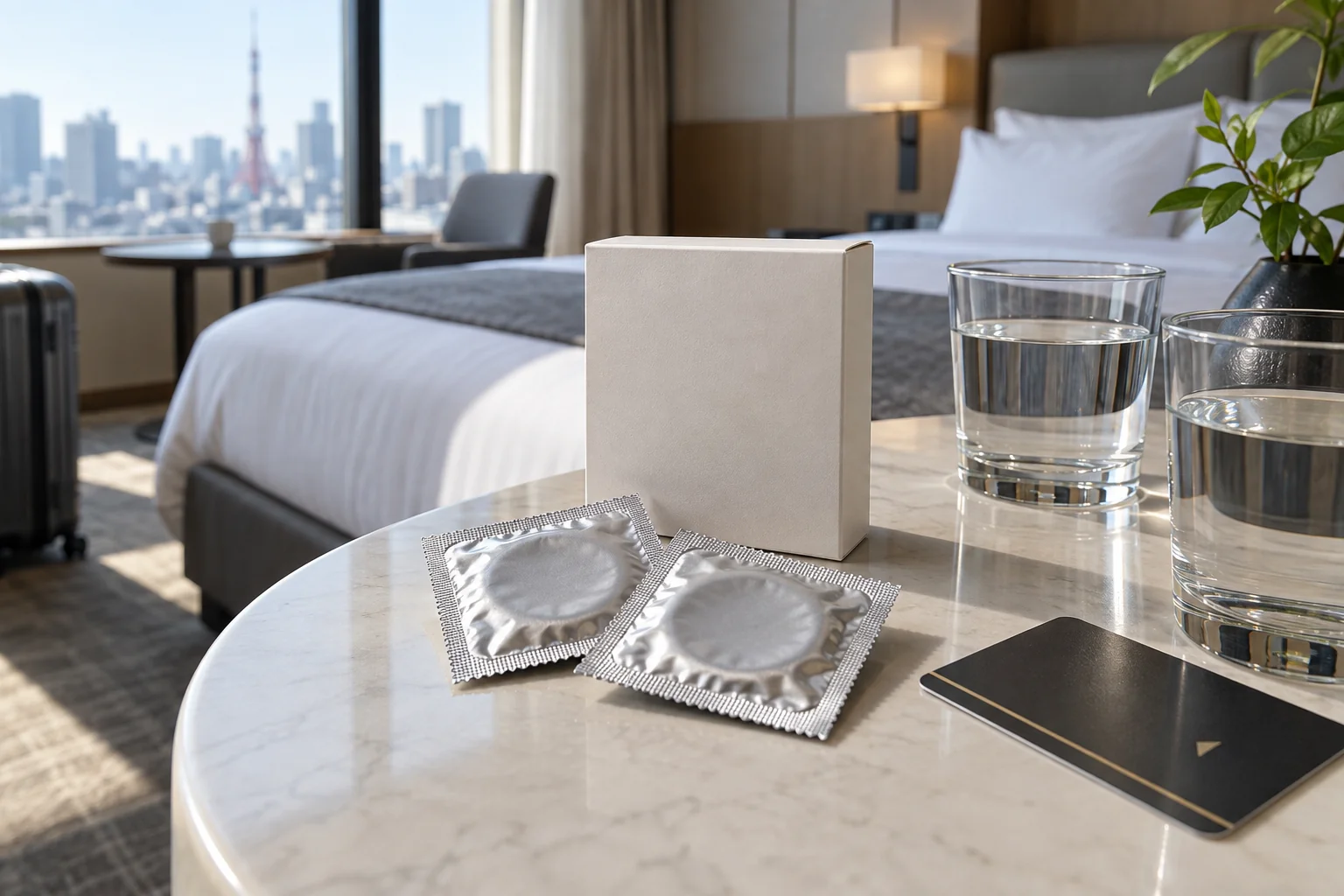
Primary guidance checked September 26, 2026. The consent and condom sources support the stated principles; scripts, logistics and phone advice are Neon Footnotes editorial suggestions, not a survey of Japanese dating behavior or individualized medical or legal advice. The hotel-room still life is AI-generated.
Continue by topic
More Dating in Japan guides