After hours / NF 023
Men, women, one bath:what Japan’s mixed onsen teaches about intimacy
Japan’s increasingly rare mixed baths can feel startling to visitors. The real surprise is how rules make nakedness ordinary rather than automatically sexual.
Evidence label / Mixed-bathing guidance • Cultural context • First-visit checklist
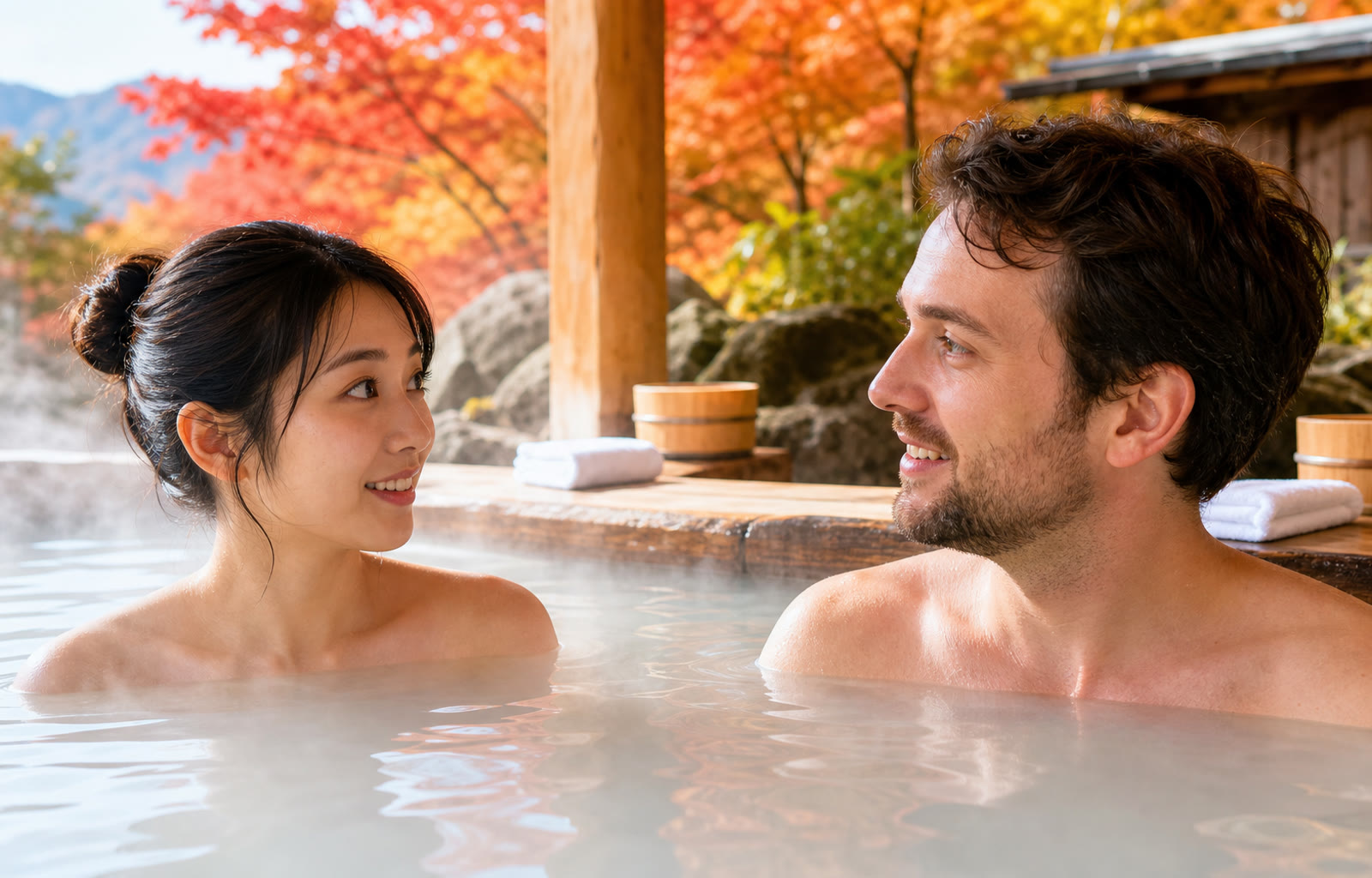
A woman, a man and no swimsuits: Japan’s traditional mixed-gender baths, called konyoku, can sound more erotic from outside than they usually feel from inside.
They are now uncommon, and rules differ sharply between facilities. But where mixed bathing continues, it offers a striking lesson in the difference between exposure and invitation.
Mixed bathing exists—but it is the exception
The great majority of Japanese communal hot springs separate men and women. JNTO describes fully mixed baths as a small and increasingly rare category, while other shared facilities require a provided bathing garment or swimsuit. Never assume “mixed” also means naked.
Traditional examples remain, including outdoor baths where local rules preserve a longstanding practice. Check whether towels, yuami-gi bathing garments or swimsuits are permitted or required, and whether there are women-only hours, before arriving.
The ritual creates the boundary
Where the facility requires washing before entry, wash thoroughly. Keep your hair out of the water, move without splashing and speak quietly. Photography is prohibited in bathing and changing areas unless a facility explicitly says otherwise; privacy still matters when bodies are not hidden from one another.
These rules turn a vulnerable situation into a predictable one. Nobody has to wonder whether staring, filming or loud joking is normal. The etiquette supplies an answer before discomfort becomes confrontation.
Exposure is physical. Intimacy is negotiated.
Looking is human; staring is a choice
A first-time visitor may notice bodies precisely because they are trying not to. The useful response is not panic or theatrical eye contact with the ceiling. Keep your gaze ordinary, give people space and behave as you would in a changing room whose trust you want to preserve.
Do not comment on another guest’s body, tattoos, age or grooming. Communal bathing creates proximity, not familiarity. A relaxed room depends on everyone declining to turn difference into spectacle.
Mixed does not mean flirtation
Do not choose konyoku as a venue for approaching strangers. A woman entering a mixed bath has agreed to use that bath—not to conversation, observation or romance. Couples should not treat other bathers as scenery for a provocative holiday story.
Tattoo, privacy and access policies are not uniform. A private reservable bath can help visitors who need more privacy, have tattoos or want to bathe with a partner without involving strangers.
A calm first-visit plan
Read the entrance rules, hydrate, avoid bathing when heavily intoxicated and start with a short soak. Hot water affects people differently; step out if you feel dizzy. Bring no phone into the bathing area, even if you promise not to use the camera.
The deeper lesson is simple: intimacy is not produced by the gender mix or amount of skin on display. It is produced by attention, consent and context. In a mixed bath, respect is what lets everybody stop performing and simply be warm.
Keep reading
Mixed baths are uncommon and rules vary by facility. Check current clothing, tattoo, access and women-only-time policies directly before visiting.
Continue by topic
More Tokyo nightlife guides