Social guide / NF 028
Visiting your Japanese partner’s family home?Ask these questions before you go
Clarify the occasion, ask about a small gift and follow the household’s lead. A first family visit works better with a shared plan than a list of national stereotypes.
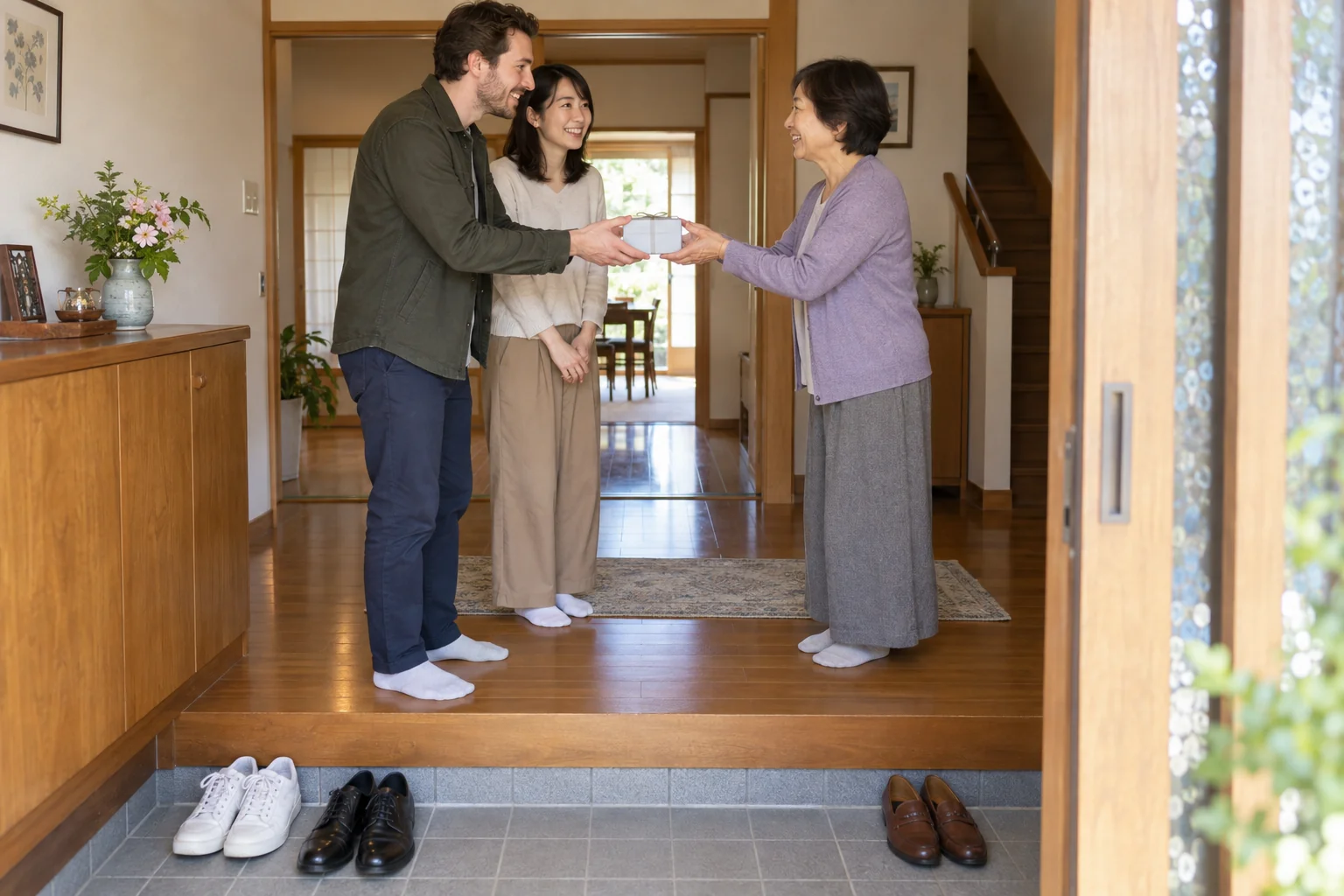
Evidence label / JNTO visitor guidance • Household-specific questions • Practical conversation prompts
Meeting a partner’s family can make an ordinary doorway feel like an exam. Before memorizing a bow or shopping for an impressive present, ask your partner what this particular visit means to the people attending.
This guide combines JNTO’s published visitor etiquette with our suggested planning questions. The official guidance supports everyday manners; it does not tell us whether your partner’s parents interpret an invitation as casual, serious or a step toward marriage.
1. Name the occasion together
Ask: “Is this a casual meal, a first introduction, or a conversation about our future?” Confirm who will be there, how long the visit should last and how your partner plans to introduce you. If you understand different amounts of Japanese, agree on when they can help translate.
These are planning suggestions, not rules about Japanese families. Do not announce an engagement, discuss living together as a settled decision or introduce another major commitment just because meeting the family feels momentous. Talk privately first so that both partners can choose what to share.
2. Ask about a gift before choosing one
Our suggestion is to ask your partner whether a small gift would be welcome and what the household would actually enjoy. If food is suggested, check dietary restrictions and whether it is easy to share or store. An attractive box is less useful than something the hosts can use.
There is no price target in this guide. A costly present can make a simple visit feel more formal than intended. If your partner says the family would prefer no gift, take that seriously. Offer what you brought with a brief explanation instead of asking the hosts to demonstrate enthusiasm or open it immediately.
Prepare for the household you are visiting, not the family you imagined.
3. Slow down at the entrance
JNTO says removing outdoor shoes at the entrance is expected in the vast majority of Japanese homes. Pause there, follow the host’s directions and ask where to leave your shoes. If indoor slippers are provided, ask where they should be worn rather than treating every floor as the same.
The phrase “ojamashimasu” acknowledges entering someone else’s space; JNTO recommends it when entering a home. A modest bow is a useful greeting, and you can let the host lead on handshakes or hugs. If removing shoes or standing at the step is difficult for you, arrange a practical accommodation with your partner in advance.
4. Make conversation easier for everyone
Prepare a short introduction: your name, where you live and one ordinary thing you enjoy. Ask your partner which names or forms of address the hosts prefer. Talk to the person speaking, even when your partner helps translate, and leave room for an answer instead of treating every pause as a problem.
Our suggested response to a question you do not understand is simply: “Could you say that another way?” If asked about marriage, work or where you might live, answer honestly without promising something to keep the room comfortable. You and your partner can say that you are still discussing it.
5. Follow the table, then close the visit clearly
JNTO’s dining guidance recommends waiting until everyone has food before beginning and asking before taking the last portion of a shared dish. Tell your partner about food restrictions before the visit so the host has time to plan. A polite question is more useful than silently struggling through the meal.
Our practical advice is to offer help once and accept the host’s answer. Keep the agreed departure time in mind, thank the hosts before leaving and ask your partner whether a short thank-you message afterward would be welcome. Do not photograph or post the home or family without asking those involved.
Three assumptions to leave outside
An invitation is not evidence of an engagement. A reserved reaction is not enough to diagnose rejection. A gift is not a test with one nationally correct answer. These are cautions against overinterpreting limited information, not findings about how often families behave in a particular way.
The sources below are general visitor guidance, not a survey of Japanese parents or research predicting relationship outcomes. They cannot establish what this household expects. Use them for the basics, then ask your partner and hosts about the details. A considerate visit leaves room for everyone to explain their own preferences.
Keep reading
JNTO supports the general etiquette points. Gift, conversation and relationship-planning suggestions are editorial advice, not measured national norms or a claim about every Japanese family. The image is an AI-generated illustration.
Continue by topic
More Dating in Japan guides