Women & culture / NF 024
What does iroke mean?Japan’s sex appeal is not quite “sexy”
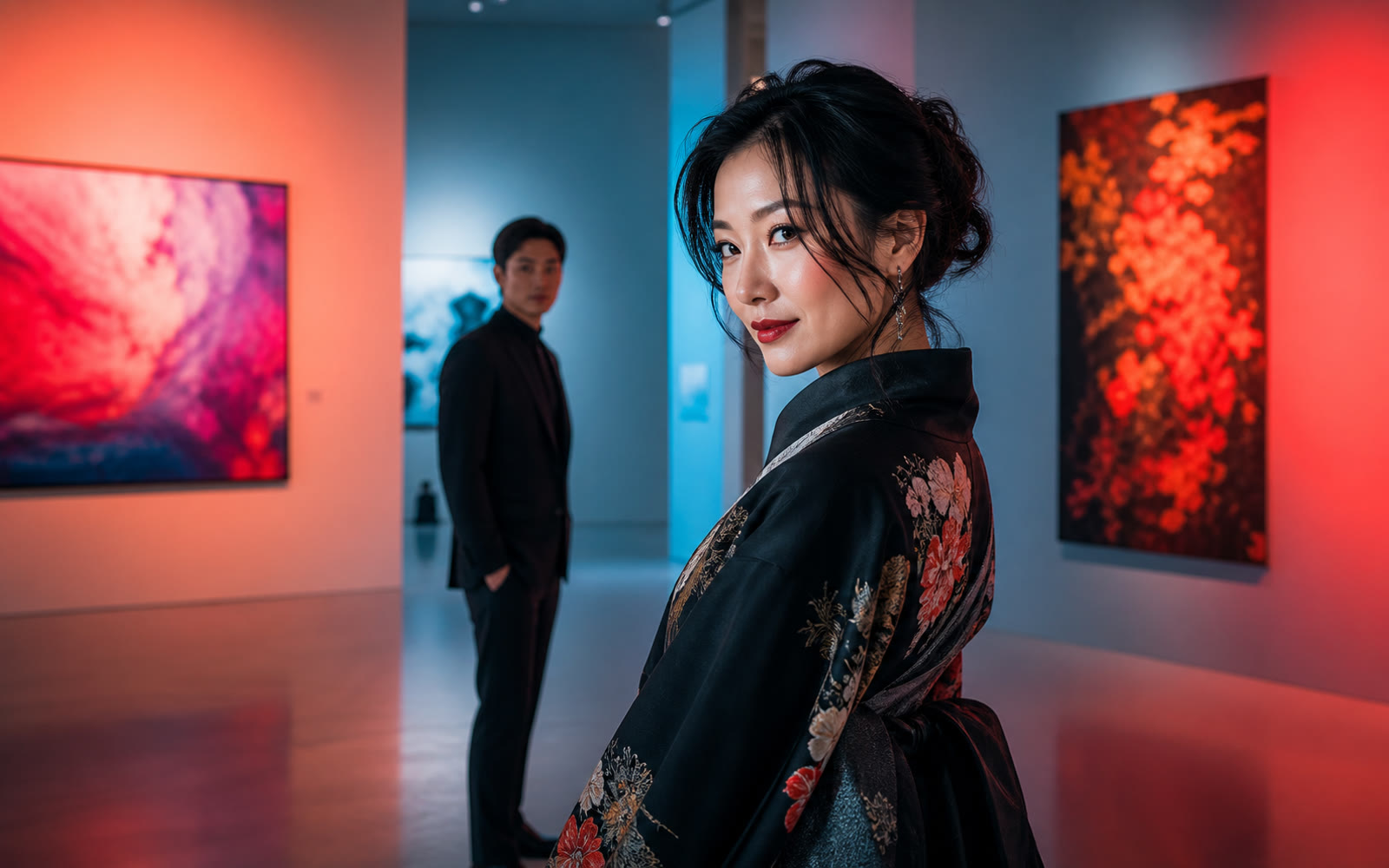
A glance, a pause, the nape of a neck—or simply an intriguing presence. Iroke explains why allure in Japanese is often more atmosphere than anatomy.
Evidence label / Japanese dictionaries • Art history • Translation with limits
Translate 色気 (iroke) as “sex appeal” and you get close enough to begin—and far enough away to misunderstand it.
The word can point to erotic attraction, but also to charm, atmosphere, human warmth or an intriguing hint of something not fully stated. Skin can create iroke. So can restraint.
The dictionary is more suggestive than the translation
Japanese dictionaries give iroke several branches: color or tone, sexual interest, sexual attractiveness, charm, the presence of women and even interest or ambition in a broader matter. The meanings share an idea of color entering a neutral scene—something begins to pull attention.
That is why “sexy” is sometimes too direct. English often makes the body the headline. Iroke can remain in the lighting, voice, posture, timing or gap between what a person reveals and withholds.
Why the nape became a cliché—and what it misses
The exposed nape beneath arranged hair is often presented as a Japanese symbol of sensuality. It can be one example, especially in historical dress, but turning it into a national secret formula flattens fashion, period and individual taste.
Edo-period images of beauties could find sensuality in ordinary gestures such as washing hair or clothing momentarily loosened during daily life. The charge came partly from suggestion and observation, not a modern glamour pose.
Iroke is the moment attention acquires color—before anyone explains why.
Iroke is not a ranking of Japanese women
Calling one person iroke ga aru can mean she or he has allure, but the compliment is intimate and context-dependent. It is not a useful opening line for a stranger, and it does not authorize foreigners to audit which women seem “traditionally feminine.”
Japanese people disagree about attractiveness just as everyone else does. Age, gender, subculture and personal history change what feels magnetic. A word with cultural texture is still not a national personality test.
Related words do not collapse into one mood
Iroppoi often sounds more visibly sexy or seductive. Tsuya can evoke gloss, luster and a healthy or sensual radiance. Iki, a famous Edo aesthetic term, carries ideas of stylish sophistication and restraint. They overlap in conversation but are not interchangeable labels.
Translation should follow the scene. A song, fashion review, conversation about an actor and description of a room may use “allure,” “sensuality,” “charm,” “warmth” or “a hint of romance” more naturally than the same English word every time.
The practical lesson is attention without entitlement
Iroke helps explain why attraction can live in ambiguity. It does not mean ambiguity is consent. A lingering look in a photograph, elegant clothes or a warm voice may be aesthetically suggestive without being a personal invitation.
Notice atmosphere, but ask about action. That distinction makes the word more interesting and your behavior more adult: beauty can remain unresolved without somebody being required to resolve it for you.
Keep reading
This is a translation and cultural-history explainer, not a claim that all Japanese speakers or eras use the word identically.
Continue by topic
More Japanese women & culture guides