Social guide / NF 022
Driving in Japan after September 1:the new 30 km/h local-road rule
No center line may now mean a 30 km/h default. Here is how visitors can recognize the affected roads, read posted limits and drive without guessing.
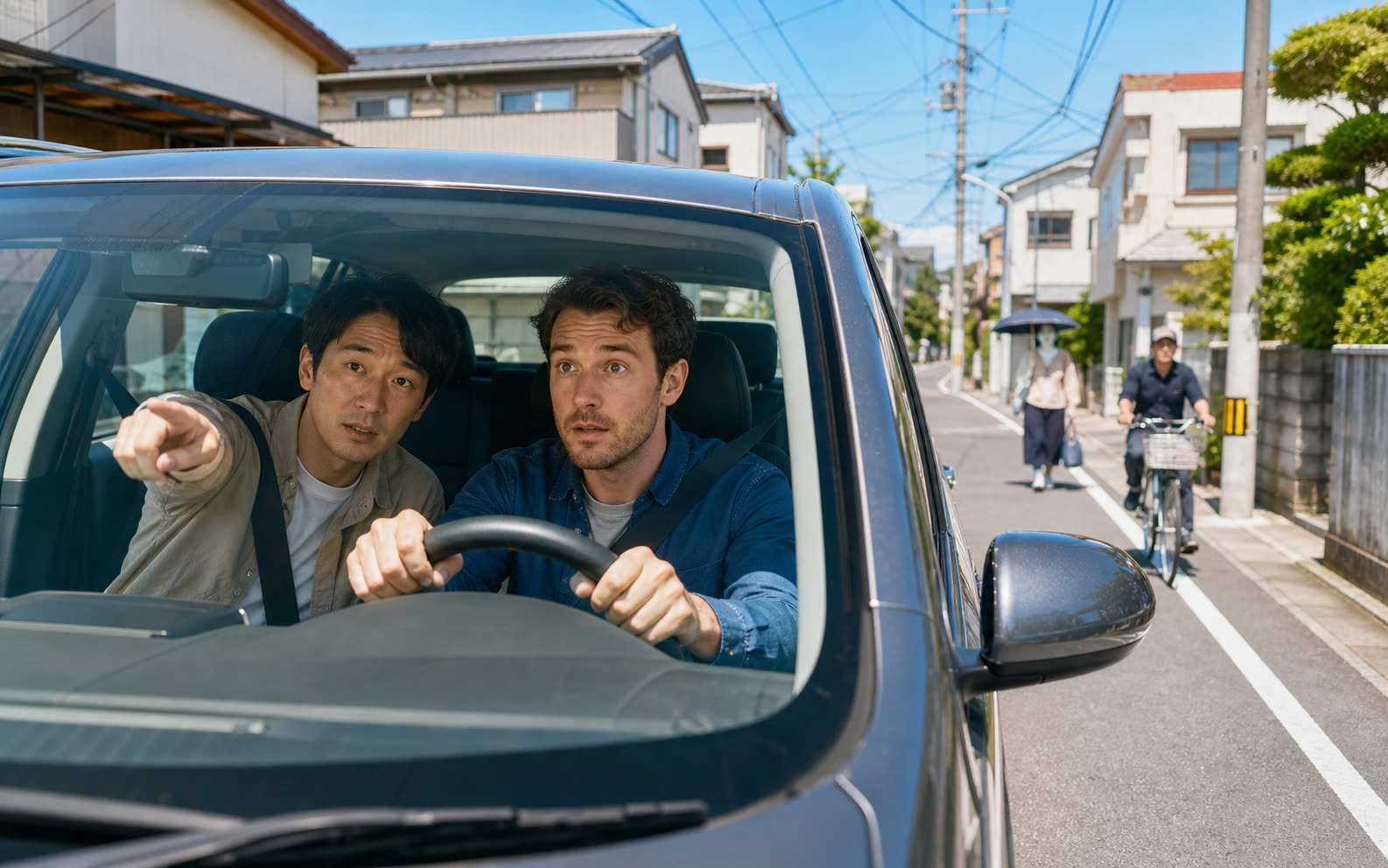
Evidence label / New national rule • Police guidance • Visitor driving checklist
A major change to Japan’s default speed limits took effect on September 1, 2026. On many local roads without a center line or vehicle-lane markings, the statutory maximum for cars is now 30 km/h instead of 60 km/h.
For visitors, the important detail is that a road does not need a new “30” sign for the lower default to apply. You must read both the posted signs and the structure of the road.
What changed on September 1
The National Police Agency says the new 30 km/h statutory limit applies mainly to roads used in residents’ daily lives that do not have a center line or marked vehicle lanes. These are the narrow neighborhood streets where homes, shops, pedestrians and bicycles often share limited space.
Before the change, an ordinary road without a posted speed restriction generally carried a 60 km/h statutory limit for cars. The reform creates a lower national default for this local-road category. It is a maximum, not a recommended cruising speed.
The fastest visual check: look for the center line
When there is no posted speed sign, first look at the road itself. A general road with no center line, no marked vehicle lanes and no structure separating opposing directions is the clearest sign that the 30 km/h default may apply.
Do not decide from width alone. A road can feel narrow yet have markings that place it in another category. Conversely, a quiet street can still have a posted limit that overrides the statutory default.
No speed sign does not mean no speed limit. From September 1, the road’s structure matters more than ever.
Which roads keep the 60 km/h statutory limit?
The reform does not make every road in Japan a 30 km/h road. The National Police Agency lists general roads with a center line or marked vehicle lanes, roads where opposing directions are physically separated, motor-vehicle-only roads and relevant expressway sections among the categories that retain the 60 km/h statutory limit when no lower posted limit applies.
Most visitors will encounter many posted limits below 60 on these roads. “Retains 60” describes the national statutory ceiling in the absence of another designation; it is not permission to ignore signs or conditions.
A posted speed sign still wins
A road sign or road marking that specifies a maximum speed takes priority over the default. The police guidance gives a useful example: if a local road has a posted 40 km/h limit, the maximum is 40—not the new 30 km/h default.
The reverse matters too. A road that would otherwise have a 60 km/h statutory limit can carry a posted 30 or 40. Navigation apps are helpful but may lag behind a legal or local change, so use the signs and road markings in front of you.
Why visitors should treat neighborhood streets differently
Japanese local roads often combine blind corners, utility poles, bicycles, people stepping out from buildings and very little separation between vehicles and pedestrians. A compact rental car does not make that space forgiving.
Slow before the corner, leave room when passing a bicycle, expect a person to appear from behind a wall and avoid using a residential street as a shortcut merely because an app offers it. The police guidance explicitly says drivers should choose a safe speed below the maximum when weather, visibility or traffic requires it.
A five-step rental-car check
Before leaving the rental office, confirm that you understand the speed-limit display, road-sign symbols and how the vehicle shows kilometers per hour. Save the rental company’s contact details and download your route before entering rural or mountainous areas.
On the road: read every posted speed sign; look for a center line and vehicle-lane markings; reduce speed when the classification is uncertain; never let the navigation voice overrule a sign; and ask a police station or the prefectural police if a specific road remains unclear.
What the evidence can—and cannot—tell you
The legal categories and effective date come from the National Police Agency and the amended Road Traffic Act Enforcement Order. News coverage was used to identify the timely visitor question, not as the legal authority.
A general article cannot classify every lane, alley or divided road from a photograph. Construction, temporary controls and local posted restrictions can change the answer. When the road in front of you conflicts with a remembered rule, follow current official signs and drive more slowly until the situation is clear.
Keep reading
This is a plain-language summary of national guidance, not legal advice. Posted limits, temporary controls and local conditions always take priority over a general explainer.
Continue by topic
More Japan etiquette guides